
Power steering fluid exchange in Alameda, CA
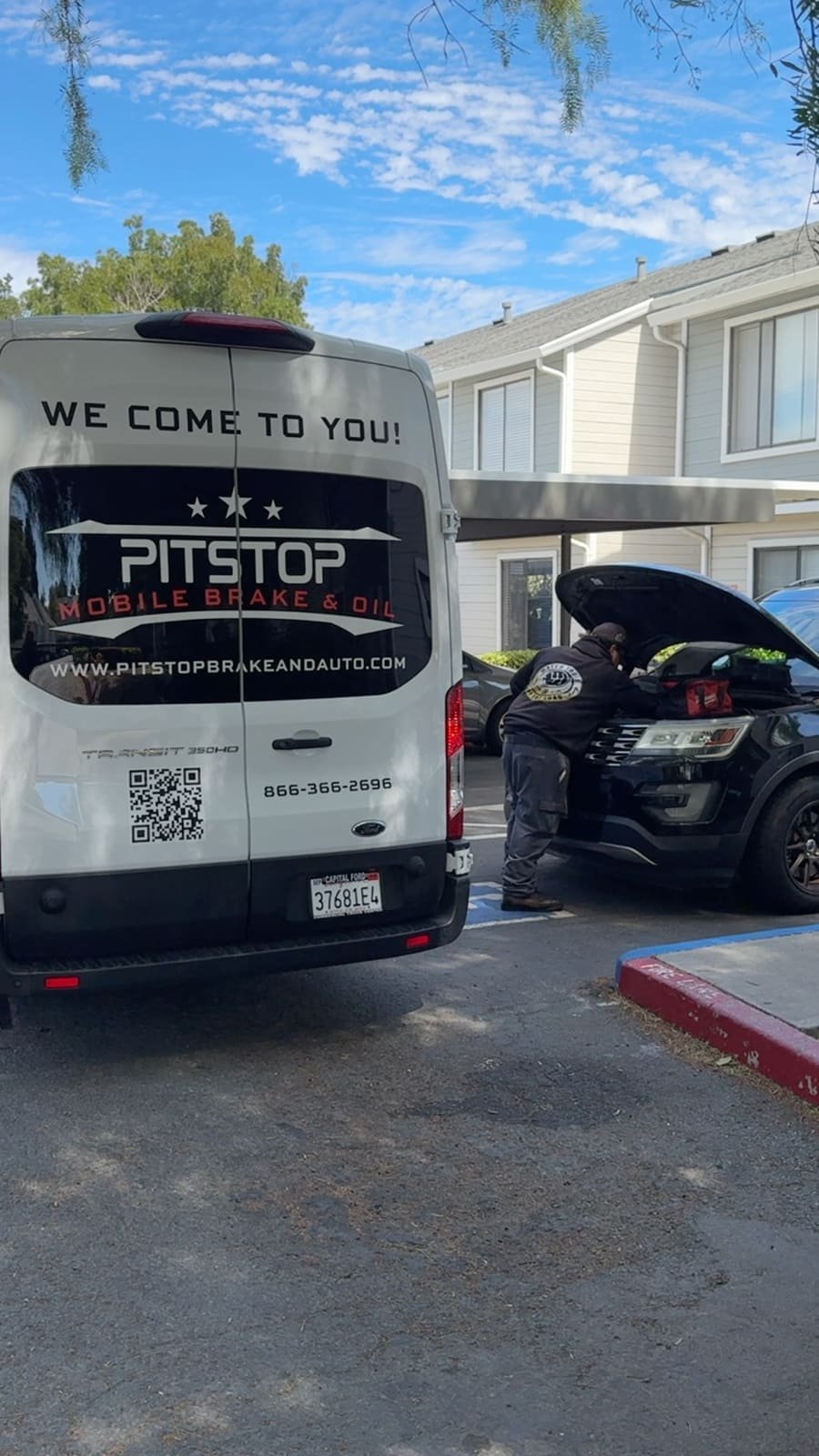
Nowhere works a power steering pump harder than a street of Victorian houses with no driveways. We exchange the fluid at your kerbside.
Power steering fluid exchange on the island
An exchange removes the old hydraulic fluid from the reservoir, pump, hoses and steering rack, and replaces it with fresh fluid to the correct specification. That is different from draining the reservoir, which only reaches a fraction of what is in the system.
Power steering fluid is hydraulic fluid doing precise work under real pressure. As it ages it darkens, thickens and fills with fine metal and rubber worn off the pump vanes and seals. Those particles then circulate through the rack — which is the expensive part, and the reason the cheap service matters.
- Fluid condition, level and colour assessment
- Full system exchange rather than a reservoir top-up
- Correct specification fluid for your vehicle
- Reservoir screen and filter check where fitted
- Pump, hose, seal and rack leak inspection
- Belt condition and tension check
- Lock-to-lock road test to confirm the whine has gone
Why Alameda parking is hard on power steering
This is the one job where the island genuinely is a worst case. Much of Alameda was built before two-car households, so most residents park on the street — and street parking here means parallel parking, repeatedly, on narrow Victorian and Edwardian blocks. Every one of those manoeuvres is full lock at low speed, which is the single highest-load condition a power steering pump ever sees.
Turning the wheel to full lock while barely moving spikes hydraulic pressure and sends the fluid over the relief valve. Do that several times a day, every day, for years, and the fluid degrades far faster than it would on a car that lives in a driveway and mostly drives in straight lines. Alameda pumps and racks work for their living.
It also stays quiet until it is not. There is no warning light for power steering fluid and no service reminder on most vehicles, so it tends to be the last fluid anyone thinks about. By the time you hear a whine on full lock, the pump is usually already struggling rather than just starting to.
When should it be changed?
Broadly every 50,000 to 75,000 miles, and sooner on a car that parallel parks daily.
A whine or groan when you turn
The classic symptom, and usually loudest at parking speeds on full lock.
The steering has gone heavy
Loss of assist, most noticeable exactly when you are trying to park.
You parallel park several times a day
The heaviest duty cycle there is for a power steering system.
The fluid is dark or smells burnt
Fresh fluid is clear, red or light amber depending on type.
Reddish fluid under the front of the car
A leak somewhere. Worth finding before topping up again.
Steering feels notchy or uneven
Contaminated fluid moving unevenly through the rack.
How our mobile power steering fluid exchange works in Alameda
Tell us the vehicle and where it is parked — kerbside off Park Street, near the Gold Coast, in the West End, or out on Bay Farm. If you want a power steering fluid exchange near you in Alameda, request it here or call. Mention whether the steering whines, feels heavy, or you have found reddish fluid underneath, because that changes what we look at first. If your car has electric power steering there is no fluid to change at all, and we will tell you that rather than selling you a service you do not need.
- Describe the symptom — whine, heaviness, or a puddle.
- We inspect the fluid and check for leaks across the pump, hoses and rack.
- We exchange the fluid with the correct specification for your vehicle.
- We road test lock to lock to confirm the assist is right and quiet.
Power steering questions from Alameda drivers
My car has electric power steering. Does it need this?
No. Electric systems have no hydraulic fluid, so there is nothing to service. If yours whines or goes heavy that is a fault rather than maintenance, and we would diagnose it instead of selling you a fluid change.
Does parallel parking really wear it out faster?
Yes, measurably. Full lock at low speed is peak hydraulic load, and on the island most people do it several times a day. It is the clearest example we see of local driving patterns showing up in a specific component.
Will this fix my whine?
Often, if the noise comes from degraded or low fluid. If the pump is already worn it will reduce rather than eliminate it, and we will tell you honestly which one you are dealing with before you spend anything.
Can you do it kerbside?
Yes. It needs no lift, just a legal space on level ground with room to work at the front of the car.
Driven by trust
What our California drivers
have to say
While we’re there
Related services
Where steering work usually leads.
Where we work
Power steering fluid exchange across Alameda
Steering servicing across the island and Bay Farm. Pick your town, or just call.
Whining on full lock?
Fluid is cheap. Pumps and racks are not. We will tell you which one you are dealing with.