
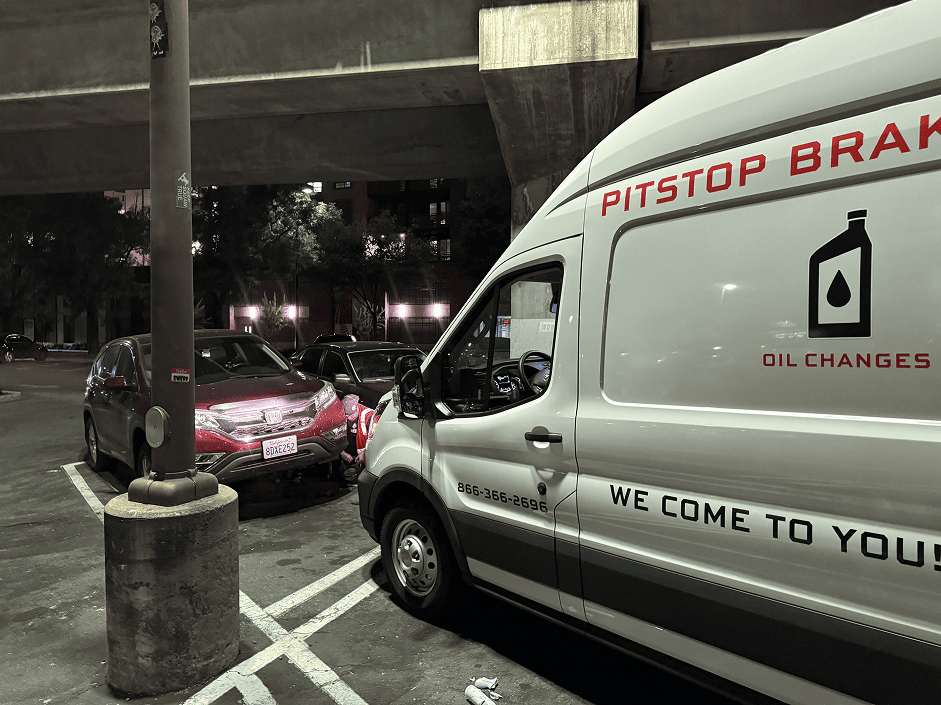
Brakes squeaking in Walnut Creek, CA
Some brake noise is normal. Some is a built-in warning. And one particular sound means you are damaging the rotors right now — here is how to tell them apart.
What does the noise mean?
Not all brake noise is a fault. A light squeal on the first few stops of a cold damp morning is usually surface rust burning off the rotors and disappears within a mile. That is normal, particularly on a car that sits outside or is not driven daily.
What matters is noise that persists. A steady high-pitched squeal under braking is usually the wear indicator — a small metal tab designed to touch the rotor when the pad gets low. It is deliberately annoying, and it is telling you that you have weeks left, not that the brakes have just failed.
- Pad thickness measured on all four corners
- Rotor thickness, runout and surface condition
- Wear indicator contact check
- Caliper slide pin and piston freedom
- Anti-rattle hardware and shim condition
- Rear drum inspection where fitted
- Road test to reproduce and identify the noise
Why act on the noise?
Because there is a specific point at which the cost multiplies. Pads have friction material on a steel backing plate. Run them past the wear indicator and eventually that steel plate grinds directly into the rotor, gouging it. What was a pad change becomes pads and rotors, and occasionally a seized caliper as well.
The noise is also generous with warning. Manufacturers build in the wear indicator precisely so you get weeks of notice. Almost every metal-on-metal brake job we attend started as a squeal somebody lived with for a couple of months.
Which noise do you have?
The specific sound tells you a lot about how urgent this is.
Light squeal on the first stops only
Usually surface rust burning off. Normal, especially on a car parked outside.
Steady high-pitched squeal when braking
The wear indicator. You have weeks. Book it in.
Harsh grinding or scraping
Metal on metal. The rotor is being damaged now. Stop driving.
Squeal that stops when you brake
Often the indicator touching only when the pad is off the rotor — still worth checking.
Noise from one wheel only
Frequently a sticking caliper or seized slide pin rather than pad wear.
Clunking rather than squealing
Loose hardware or worn suspension rather than the pads themselves.
How our mobile brake noise service works
Tell us what the noise sounds like and when it happens — a light squeal on the first stops of a cold morning is usually harmless, a steady squeal under braking is the wear indicator, and grinding means the pads are gone. For a brake check near you in Walnut Creek or the East Bay, request a quote here or call. We road test to reproduce the noise, then measure pads and rotors on all four corners and show you the readings. Telling you the pads are fine and the noise is surface rust is a normal outcome.
- Describe the noise — when it happens and from which corner.
- We road test and inspect all four corners at your address.
- We measure pads and rotors and show you the readings.
- You decide, with an honest answer on whether rotors are needed too.
Brake noise questions we get asked
Are squeaky brakes always a problem?
No. A brief squeal on the first stops of a cold morning is usually just surface rust. Noise that persists after a mile of driving is worth investigating.
How long can I drive with squealing brakes?
If it is the wear indicator, typically a few weeks. If it is grinding, stop — you are cutting into the rotors with every stop.
My brakes are new and still squeak. Why?
Some pad compounds, particularly harder ceramic and semi-metallic ones, squeal more. It can also mean missing shims, dry slide pins or pads that were never bedded in properly.
Do you charge just to look?
We measure and give you the readings. If work is needed, you get a price before anything starts — and if the pads are fine, we will tell you that too.
Driven by trust
What our California drivers
have to say
While we’re there
Related services
Where brake noise usually leads.
Where we work
Brake noise checks in Walnut Creek and the East Bay
Brake inspections across Walnut Creek and the surrounding East Bay. Pick your town, or just call.
Looking for a mobile mechanic near you in Walnut Creek? PitStop Mobile Mechanics is based at 1990 N California Blvd 8th Floor in Walnut Creek, and covers the surrounding East Bay — Alameda County, Walnut Creek, Pleasanton, Pleasant Hill, San Ramon, Concord, Danville, Lafayette, Oakland, Alameda, Berkeley, Emeryville, Albany, Orinda, Alamo, Martinez, Pacheco, Dublin, Livermore, Pittsburg, Antioch and Brentwood.
Because we are fully mobile there is no shop to drive to and no waiting room. We come to your home, your workplace car park or the roadside, diagnose the fault where the car is parked, and give you a price before any work begins.
Squeal or grind?
One gives you weeks of warning. The other is costing you rotors with every stop.