
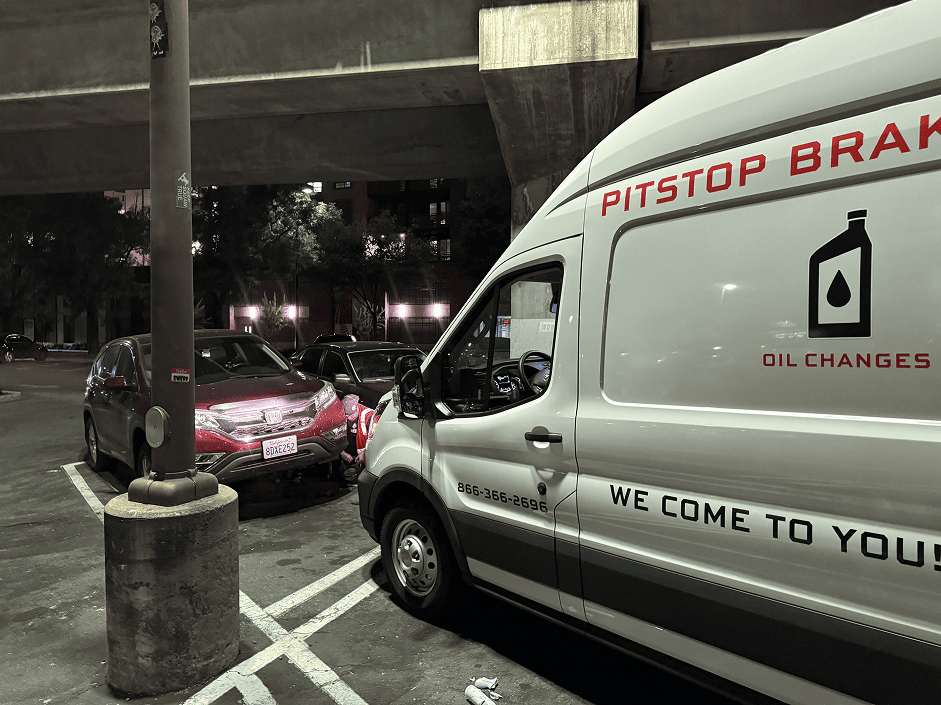
Brake fluid replacement in Walnut Creek, CA
The service almost nobody books and every car needs. Brake fluid absorbs water from the air, and water boils long before brake fluid does.
What is brake fluid replacement?
Brake fluid replacement means flushing the old fluid out of the entire system — master cylinder, lines and all four calipers — and bleeding through fresh fluid to the manufacturer’s specification. It is not a top-up. Topping up adds fluid to a system that is already contaminated.
The reason it needs doing on a schedule is chemistry rather than wear. Brake fluid is hygroscopic, meaning it pulls moisture out of the air through seals and hoses over time. A three-year-old system can be carrying two to three percent water without a single leak or any visible sign that anything is wrong.
- Moisture content tested before we quote
- Full system flush — master cylinder, lines and all four corners
- Correct DOT specification fluid for your vehicle
- Bleed sequence to manufacturer order
- ABS module bleed where the vehicle requires it
- Caliper, hose and line inspection while we are in there
- Firm-pedal road test before we leave
Why does brake fluid matter?
Because water boils at 100°C and fresh brake fluid does not boil until well over 200°C. Braking generates serious heat, and heat travels into the fluid. In a system carrying absorbed moisture, that water can flash to vapour under sustained braking — and vapour compresses where fluid does not. The pedal goes soft or drops to the floor precisely when you are braking hardest.
That is not a theoretical risk in this area. A long descent from the Oakland Hills, off Mount Diablo, or down the Caldecott approach puts continuous heat into the brakes in a way flat driving never does. Old fluid also corrodes ABS components and caliper pistons from the inside, which turns a modest service into an expensive repair.
When should brake fluid be replaced?
Most manufacturers specify every two to three years regardless of mileage. Age matters more than distance here.
It has been three years or more
The most reliable signal. Moisture accumulates on a timeline, not an odometer.
The pedal feels soft or spongy
Air or vapour in the system. Worth investigating immediately rather than living with.
The pedal sinks slowly under steady pressure
Can indicate a failing master cylinder as well as degraded fluid.
The fluid looks dark or cloudy
Fresh fluid is clear to light amber. Dark brown means it is well past due.
Braking feels different after a long descent
Fade after sustained braking is the classic symptom of moisture-contaminated fluid.
You tow, or drive the hills regularly
Heat cycles accelerate everything. Shorter intervals are sensible.
How our mobile brake fluid replacement service works
Tell us the vehicle and roughly when the fluid was last changed — and if nobody knows, say so, because that is a common answer and it usually means it is due. For brake fluid replacement near you in Walnut Creek or the East Bay, request a quote here or call. We test moisture content on site and show you the reading before quoting, so you are not taking our word for it. The flush covers the master cylinder, the lines and all four calipers, and we bleed in the manufacturer sequence and road test for a firm pedal.
- Tell us the vehicle and when the fluid was last changed, if you know.
- We test moisture content on site and show you the reading.
- We flush and bleed the full system in the correct sequence.
- We road test for a firm pedal and take the old fluid away.
Brake fluid questions we get asked
How often does brake fluid actually need changing?
Most manufacturers say every two to three years, and that figure is about moisture absorption rather than mileage. A low-mileage car that has sat for four years needs it just as much as a high-mileage one.
Can you not just top it up?
Topping up raises the level but does nothing about the contaminated fluid already in the system. It also masks the real question — if the level has dropped, either the pads are worn or something is leaking.
What is DOT 3, DOT 4 and DOT 5.1?
Different specifications with different boiling points and moisture tolerances. We use whatever your vehicle specifies. Mixing types, or using a lower specification than the manufacturer calls for, is a genuine safety issue.
Can this be done at my house?
Yes. It needs no lift, just level ground and access to all four wheels, so it is an ideal mobile job. Most vehicles take around an hour.
Driven by trust
What our California drivers
have to say
While we’re there
Related services
What sits alongside a fluid change.
Where we work
Brake fluid replacement in Walnut Creek and the East Bay
Brake servicing at homes and workplaces across Walnut Creek and the surrounding East Bay. Pick your town, or just call.
When was it last done?
If nobody can remember, it is due. We will test the moisture content and tell you straight.